Why Dogs Treat Toy Swapping Like a Game Show and What It Reveals About Their Behavior

Updated: Aug 11
Why Your Dog Brings You One Toy Just to Swap It for Another: The Yellowstone Pooper Scoopers Guide to Chaotic Canine Toy Politics 🐕🔥
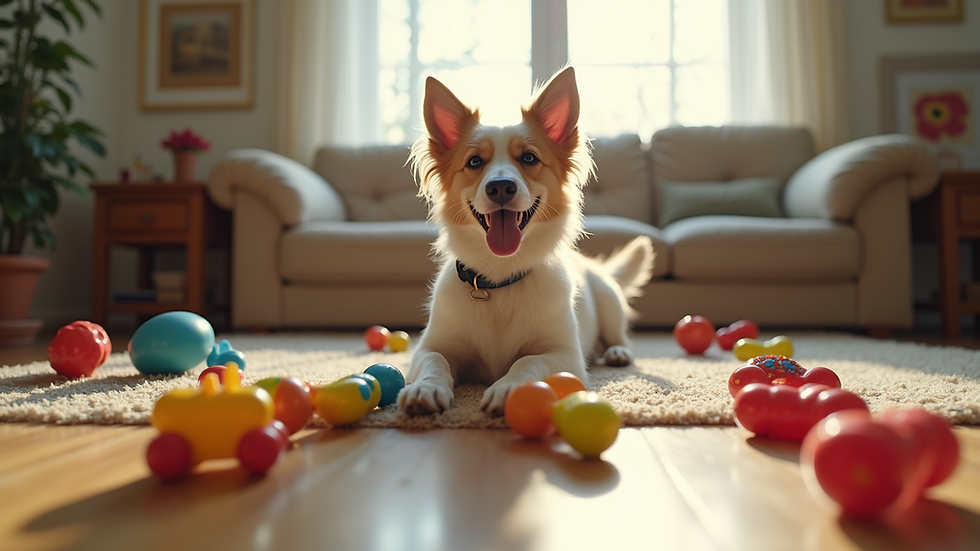
If you’ve ever lived with a dog, you’ve probably witnessed the moment where your pup proudly trots over with a tennis ball… only to immediately abandon it and return with a squeaky duck, then a rope toy, then a stuffed squirrel that looks like it survived a tornado. Suddenly, your living room looks like a toy store exploded, and you’re standing there wondering whether your dog wants to play fetch or if you’ve accidentally been drafted into a negotiation you didn’t agree to. 🧸💥
Here’s the truth: your dog isn’t confused. They’re running a whole secret agenda, and you’re just the human they chose to involve. Dogs don’t think in “one toy = one game.” They think in “I have initiated the ceremonial offering; now let the chaos begin.” 🐶🎭
Many dogs use the first toy as nothing more than an opening move. The moment you look up, speak, or stand, the mission is accomplished. You thought you agreed to fetch. Your dog thought you agreed to whatever this becomes — tug, chase, hallway sprints, dramatic toy drops, or a full‑scale household scavenger hunt. They’re basically tiny game show hosts who keep introducing new challenges before anyone finishes the previous one. 🎬🐾
And sometimes, it’s instinct. Long before plush tacos and squeaky hedgehogs existed, dogs hunted, grabbed, carried, traded, and relocated things. Today, that ancient sequence shows up as your dog redistributing toys across the house like they’re staging a crime scene for investigators. The rope toy ends up in the kitchen. The duck migrates under the dining table. The tennis ball appears upstairs. The toy basket? Completely ignored. 🦴🕵️♂️
Other dogs care less about the toy and more about your reaction. They’ve learned that dropping a damp tennis ball on your keyboard gets attention. So does placing a rope toy directly in your walking path. So does squeaking a toy during your Zoom call like they’re sending Morse code. Your dog isn’t confused — they’re a tiny attention economist who knows exactly how to interrupt your workflow. 💼🐕
And yes, sometimes you accidentally taught them to trade up. If you’ve ever used Toy B to get Toy A back, your dog learned that presenting an object leads to something better. Suddenly socks, shoes, remotes, and dish towels enter the rotation like they’re auditioning for the role of “Most Inconvenient Item.” 🧦📺
Some dogs simply run a toy‑rotation program. They don’t have one favorite — they have favorites of the moment. A squeaky duck is everything for 15 minutes. Then it’s dead to them. Now the rope toy is the most important object ever created. Then that’s forgotten too. Your dog treats their toy basket the way people treat streaming services: browsing endlessly without committing. 📺🐕
Every dog has a toy personality. Maybe yours is The Curator (owns 37 toys, plays with 2), The Negotiator (arrives carrying a sock and waits for trade offers), The Acoustic Engineer (only cares about the loudest toy at 2 AM), or The Entertainment Director (brings you toys until the living room becomes a disaster zone). 🎭🧸
Some dogs do this more than others because of genetics. Retrievers love carrying things. Herding breeds turn toys into group activities. Terriers bring the intensity of a caffeinated toddler. And even within the same breed, personalities vary wildly — one dog treasures a single beloved toy for years, while another treats the toy basket like a department requiring full‑time supervision. 🐕🦺📦
Overexcited dogs often grab toys not to play, but to channel their emotions. When you come home, they parade around with a toy while wiggling like their entire rear half is operating at a different frame rate. The toy becomes part of their excitement ritual — a way to manage the “OH MY GOD YOU’RE HOME” energy surge. 🎉🐾
Some dogs bring toys but won’t let you have them. They approach dramatically, pause, wait for your hand, then sprint away like they’ve committed a crime. You’re not playing fetch — you’re playing “Almost Fetch,” a game with rules your dog forgot to explain. This is different from resource guarding; these dogs are loose, playful, and deeply committed to the bit. 🏃♂️🧸
Toy love only becomes a problem when it turns into fixation — guarding, distress, skipping meals, ignoring everything except the toy. Most dogs, though, fall comfortably into the category of “delightfully strange.” 🐶💛
Dogs use toys to communicate. Toy swapping is just one of their weird little messages. Once you start noticing how often your dog uses toys, body language, dramatic entrances, and chaotic household rituals to interact with you, their behavior starts looking less random and a lot more intentional. 🐕✨
Whether your dog treasures one haunted stuffed animal, rotates through toys like an overcaffeinated event planner, or insists on playing “Almost Fetch” every day, their toy habits are part of how they pull you into their world. And honestly? It’s one of the best parts of living with them. 🧡🐾
Dogs Use Toy Swapping to Create Playful Chaos
When your dog brings you a toy, it’s often just the opening move in a much bigger game. The first toy is like a ceremonial offering, signaling that playtime has begun. But the game rarely sticks to one toy or one activity. Instead, your dog quickly switches toys to keep the excitement alive and to invite you into a dynamic, unpredictable play session.
This behavior can include:
Tug-of-war with a rope toy
Chasing after a squeaky duck
Sprinting down the hallway with a tennis ball
Dramatic toy drops to get your attention
Scavenger hunts around the house for hidden toys
Your dog isn’t indecisive; they are masters of creating variety and fun. They want to keep you engaged, and switching toys is their way of saying, “Let’s see what happens next!”
The Ancient Instinct Behind Toy Trading
Long before dogs had squeaky toys and plush animals, their ancestors hunted, carried, and traded objects as part of survival. This instinct to grab, relocate, and exchange items still lives in modern dogs. When your dog moves toys around the house, they’re tapping into this deep-rooted behavior.
For example:
The rope toy might end up in the kitchen
The squeaky duck could be stashed under the dining table
The tennis ball might mysteriously appear upstairs
This redistribution isn’t random. It’s a way for dogs to mark territory, create a playful environment, and keep their “prey” close but out of immediate reach. It’s like they’re setting up a puzzle for you to solve or a treasure hunt to enjoy together.
Dogs Read Your Reactions and Use Toys to Communicate
Some dogs care less about the toys themselves and more about how you respond to them. They quickly learn which toys get your attention and use them strategically. For instance:
Dropping a damp tennis ball on your keyboard might get you to stop working
Placing a rope toy directly in your walking path forces interaction
Squeaking a toy loudly can pull your focus away from distractions
This behavior shows how dogs use toys as communication tools. They want to connect with you, and toy swapping is their way of saying, “Look at me! Play with me! Notice me!”
What Toy Swapping Reveals About Your Dog’s Personality
Not all dogs swap toys in the same way. The style and frequency of toy swapping can reveal a lot about your dog’s personality and play style:
The Game Show Host: Constantly changing toys and inventing new games to keep you on your toes.
The Strategist: Moves toys around the house, creating a playful challenge for you to find and retrieve them.
The Attention Seeker: Uses toys to get your focus, especially when you’re busy or distracted.
The Collector: Prefers to gather all toys in one spot, showing a desire for control and order in their play.
Understanding your dog’s toy swapping style can help you tailor playtime to their preferences, making it more enjoyable for both of you.
How to Embrace and Encourage Your Dog’s Toy Swapping
Instead of getting frustrated by the chaos, you can use toy swapping to strengthen your bond and keep your dog mentally and physically stimulated. Here are some tips:
Join the Game: Follow your dog’s lead and switch toys with them to keep the energy flowing.
Create Toy Zones: Designate areas in your home where toys can be scattered safely for scavenger hunts.
Rotate Toys: Keep a variety of toys available but rotate them regularly to maintain novelty.
Use Toys for Training: Incorporate toy swapping into training sessions to make learning fun and interactive.
Observe and Adapt: Pay attention to which toys your dog prefers and how they use them to communicate.
By embracing the playful chaos, you turn toy swapping into a fun, shared experience that enriches your dog’s life.
The Bigger Picture: What Toy Swapping Tells Us About Dogs
Toy swapping is more than just a quirky habit. It reflects dogs’ intelligence, social nature, and deep instincts. It shows how dogs:
Use play to build relationships
Communicate their needs and emotions
Express creativity and problem-solving skills
Connect with their ancient hunting and gathering roots
Recognizing these behaviors helps us appreciate dogs as complex beings with rich inner lives. It also reminds us that play is a vital part of their well-being, not just a way to pass time.
So, the next time your dog brings you a toy, remember: it’s not just a toy. It’s an invitation to join in their world of fun, chaos, and love. Embrace it!


Comments